TSA Union Opposes Privatization Plans During Government Shutdown
Transportation Security Administration union representatives are expressing concerns that privatization proposals could accelerate during the ongoing federal shutdown, when agency workforce morale and operational performance are already strained. The debate reflects a persistent institutional tension: whether airport security should remain a federal responsibility or shift to private contractors under TSA oversight. This is substantively important because it touches on both labor economics and the underlying question of which functions should remain in government hands.

PASTEUR Act Proposes Subscription Model for Antimicrobial Drug Development
Policy advocates propose the PASTEUR Act to create a subscription-style federal purchasing agreement with pharmaceutical companies that develop novel antimicrobial agents, guaranteeing revenue independent of volume sales and reducing commercial uncertainty in antibiotic development. The mechanism attempts to solve a genuine market failure: antibiotic innovation has stalled because successful drugs are used sparingly (appropriately, to prevent resistance), generating insufficient revenue to justify R&D investment relative to chronic-disease treatments. This represents market-oriented policy design—using guaranteed procurement rather than price controls or direct subsidy to align private incentive with public health need.
ICAO tightens international power bank regulations
The International Civil Aviation Organization issued revised restrictions on lithium-ion battery devices in commercial aviation, reflecting ongoing efforts to balance passenger convenience against genuine fire-risk hazards. The regulatory adjustment reflects evolving safety data and engineering assessment; such rules require coordination across jurisdictions to avoid regulatory fragmentation. This touches on a broader pattern: how international bodies manage technical standards amid competing priorities.
Congress Deadlocked on DHS Funding Amid Shutdown
Congressional negotiators remain at an impasse over Department of Homeland Security appropriations during the ongoing federal shutdown, even as President Trump authorized executive action to pay TSA workers in the interim. The stalemate reflects deeper disagreements over border security funding levels and conditions, not mere procedural delays. This episode demonstrates how funding disputes become proxies for larger policy conflicts and illustrates the institutional costs of repeated shutdown cycles.
Senate Departs Without Resolving DHS-TSA Funding Dispute
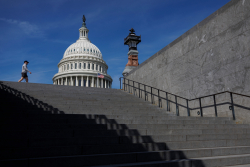
Congress adjourned without resolving funding battles for the Department of Homeland Security and TSA, leaving critical infrastructure and personnel issues unresolved. This reflects recurring institutional dysfunction—the appropriations process has become hostage to partisan leverage rather than deliberative budgeting. The excerpt cuts off mid-sentence on secondary allegations, suggesting the podcast touches multiple unrelated controversies, diluting analytical focus.
Engineered fishing nets reduce bycatch while preserving commercial viability
Technological modifications to commercial fishing equipment—including selective netting designs and acoustic deterrents—demonstrate measurable reductions in turtle and marine mammal bycatch without proportionally reducing target fish yields. This represents a genuine policy win where environmental and economic interests align through engineering rather than restriction. The challenge lies in adoption rates: while such technologies exist, regulatory incentives and market structures often favor incumbent practices, making implementation a question of institutional design rather than technological feasibility.

SAFE Bet Act: Proposed Gambling Restrictions May Expand Unregulated Markets
Senators Blumenthal and Tonko are reintroducing the SAFE Bet Act to restrict legal gambling markets, timed to March Madness. Critics argue such bans historically drive activity into illegal, unregulated channels rather than reducing gambling—a classic example of how well-intentioned prohibition can worsen consumer outcomes. This raises a fundamental question about regulatory philosophy: Should government restrict legal markets to discourage harmful behavior, or create transparent alternatives to underground operations?
Voter-ID Requirements: Democrats' Democratic-Harm Argument Faces Comparative Test
An argument that voter-ID and citizenship-verification requirements are standard in functioning democracies globally, undercutting Democratic claims that such measures inherently threaten democratic integrity. The piece presents a genuine empirical question: Do democracies with ID requirements experience systematically worse electoral outcomes or lower legitimacy? The answer matters for evaluating the trade-off between ballot security and access, though this framing biases toward one conclusion.
Recurring Appropriations Deadlocks: Structural Causes and Remedies
Chronic government shutdown threats signal deeper institutional dysfunction in budget process. The issue is not drama but mechanism: why has regular order (passing 12 appropriations bills annually) become nearly impossible? What explains the shift from baseline legislative routine to brinkmanship as default? Possible drivers include polarization, reconciliation-driven budget strategies, and rules changes. Understanding shutdown frequency requires institutional analysis, not just finger-pointing.
Williamson v. Lee Optical: Rational Basis Review and Economic Regulation
This historical note marks the 1955 Supreme Court decision establishing the highly deferential rational basis test for economic regulation, a doctrine that has permitted vast government intervention in commercial matters with minimal constitutional scrutiny. The decision remains foundational to modern administrative law, establishing that legislatures need only articulate a plausible rationale for economic restrictions, even if that rationale isn't empirically sound. Understanding Williamson is essential to grasping why economic liberty has receded as a constitutional priority and why recent efforts to revive non-delegation doctrine face doctrinal headwinds.
Biometric age verification in vape cartridges: regulatory workaround or placebo?
Some vape manufacturers are integrating biometric age-verification technology directly into nicotine and flavored cartridges, hoping regulatory approval might ease restrictions on youth-accessible products. The underlying tension is whether device-level verification genuinely addresses youth access (which depends on point-of-sale compliance, not cartridge design) or merely shifts liability to hardware manufacturers while leaving the actual problem—retail diversion and underage use—unresolved. This case study illustrates how regulatory workarounds often displace rather than solve the underlying policy problem.
Foreign State-Sponsored Content and U.S. Education: Scope and Channels
The claim requires specificity: which 'hostile powers,' which content vectors, and what constitutes 'influence'? This could range from legitimate intellectual concern (Confucius Institutes, Russian media narratives, Chinese government funding of academic programs) to conspiratorial overreach. A rigorous version would distinguish between hostile state funding of institutions, propaganda amplification on social media, and normal international academic exchange. The policy questions are real—institutional autonomy, funding transparency, foreign agent registration—but require evidence-based definition of the problem.

NASA's Mars Strategy Shifts from Contractor Wish Lists to Focused Goals
NASA has restructured its Mars exploration program to prioritize achievable mission objectives over open-ended vendor requests that historically consumed resources with minimal scientific return. The shift represents a move toward constraint-driven planning—a mechanism that forces prioritization rather than allowing budget expansion to accommodate competing interests. This reflects broader questions about space agency governance: whether NASA functions best as a technology driver or as an institutional customer managed by commercial and political constituencies.

GOP Impeachment Push Against Judge Boasberg Overlooks Constitutional Precedent
Congressional Republicans are considering impeachment of District Judge Aileen Cannon's colleague over his oversight of the Jack Smith special counsel investigation, reflecting escalating institutional conflict over prosecutorial independence and judicial review. The piece argues that regardless of one's view of the underlying investigation, impeaching judges for procedural decisions sets a dangerous precedent that politicizes the judiciary and undermines separation of powers. This highlights the tension between accountability and institutional independence—a concern that should transcend partisan frustration with particular cases.
Ruminant: TSA Privatization and the Scope of Government
This essay apparently explores the case for privatizing Transportation Security Administration functions, engaging questions about government monopoly in security provision and market-based alternatives. The excerpt is too sparse to assess the argument's rigor or analytical depth.
Philippines Imposes Rice Price Ceiling as Iran War Lifts Fuel Costs
The Philippine government is implementing a 50-peso-per-kilo price cap on imported rice as Iran-driven energy costs squeeze food inflation. Price controls are a blunt policy tool that typically generate shortages and supply disruptions; their deployment signals desperation by policymakers facing political pressure from rising staple prices. The Philippines faces a genuine trade-off: inflation damage to consumers versus shortage risks from artificial price floors.

LA Mayor Bass: Housing Affordability Tops Municipal Agenda Amid Olympic Planning
Los Angeles Mayor Karen Bass identified housing affordability as the city's primary challenge, while simultaneously discussing Olympic infrastructure investment (2028) and World Cup hosting (2026)—all demanding public capital and land use decisions. The tension here is substantive: major sporting events require upfront infrastructure spending and often accelerate real estate development, which can either catalyze affordable housing if properly mandated, or exacerbate displacement if market forces dominate. Bass's framing suggests awareness of the tradeoff, though actual policy execution (inclusionary zoning, transit-oriented development, public land strategies) remains contested.

California Targets Multi-State Tax Arbitrage in Vehicle Registration
California is moving to close the Montana registration loophole, whereby residents register vehicles out-of-state to avoid sales and use taxes. This represents regulatory effort to prevent tax base erosion through jurisdictional arbitrage—a longstanding challenge for states. The precedent matters: if California successfully redefines the nexus for vehicle taxation, it could embolden other states to pursue similar aggressive extraterritorial tax claims, raising federalism questions about whether residence or registration determines tax obligation.

Florida challenges NFL diversity coaching initiative on statutory grounds
Florida Attorney General James Uthmeier is urging the NFL to eliminate its minority coaching recruitment program, arguing it violates Florida's statute prohibiting race- and sex-based hiring considerations. This challenge tests whether state-level civil rights law can override private sector diversity policies and whether the NFL's Rooney Rule and similar measures constitute unlawful preferential treatment under conservative legal theory. The case represents a broader conflict between colorblind statutory interpretation and race-conscious organizational remedies.
Federal Judge Rejects Anthropic Blacklist Order as Unauthorized
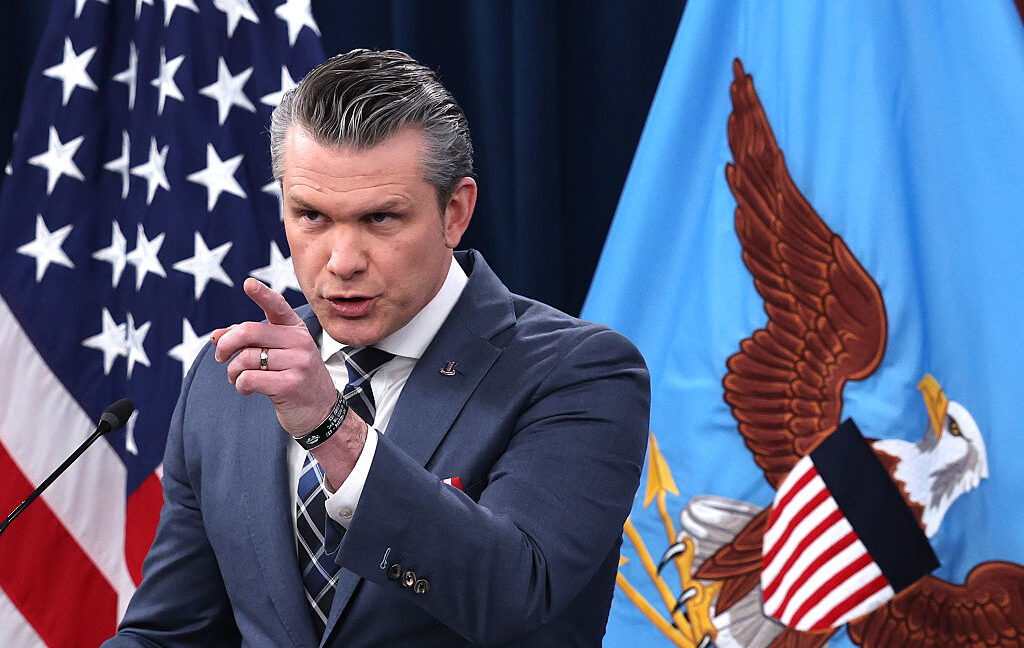
A federal judge ruled that the Trump administration lacked statutory authority to order the blacklisting of AI company Anthropic, rejecting an executive directive reportedly motivated by concerns about the company's political stance or governance. The decision clarifies that executive power over federal contracting has limits—the government cannot blacklist companies merely because of perceived bias or political views without specific statutory grounds. This represents a meaningful constraint on administrative overreach while leaving open legitimate procurement restrictions.

Minnesota Proposes State Civil Remedy for Constitutional Violations by Officials
Two Minnesota bills would create a state-level right to sue government officials for constitutional violations, bypassing the federal system's procedural barriers like qualified immunity and Younger abstention doctrine. This represents a federalism end-run around federal civil rights litigation bottlenecks—an interesting policy experiment that could either expand accountability for official misconduct or create duplicative litigation exposure depending on implementation and judicial interpretation.

Trump directs DHS to compensate TSA workers during shutdown
President Trump ordered the Department of Homeland Security to pay Transportation Security Administration employees despite the ongoing government shutdown, resolving a critical operational question. The directive addresses the institutional risk of security workforce attrition and maintains aviation infrastructure functionality during budgetary deadlock. This executive action sidesteps congressional authorization, raising questions about presidential power to commit appropriated funds during shutdowns.

Pentagon blocks promotions for four officers over diversity concerns
Defense Secretary Pete Hegseth has removed two Black and two female Army officers from one-star general promotion consideration, according to reporting, after months of pressure on senior Army leadership. The action raises questions about personnel management authority, merit-based advancement systems, and whether diversity considerations in promotion selection constitute legitimate institutional policy or discriminatory practice. The decision reflects differing philosophies within the defense establishment on how to structure officer advancement.

Should Terrorism Prevention Exempt the Filibuster?
An argument for carving out the Senate filibuster for counterterrorism legislation—allowing bills to pass with a simple majority rather than 60 votes. The proposal raises a classic institutional tension: expedited action on genuine security threats versus erosion of Senate protections for minority interests. This echoes earlier filibuster battles over judges and executive nominees, each justified by urgency but collectively weakening legislative deliberation.

Emergency Powers As Electoral Tool: Constitutional Risks
An analysis of Trump's repeated invocation of emergency authority to bypass normal legislative process, with concern that courts may need to intervene before November elections to prevent normalization of executive overreach. The piece identifies a genuine constitutional problem: whether emergency powers doctrine has become untethered from actual emergency circumstances, and whether Supreme Court clarity on standing and justiciability can restore guardrails.

Higher Ed Reform Needs Broader Deregulation Strategy
An argument that Trump administration education policy should go beyond current proposals to tackle structural problems in higher education accreditation, federal lending, and institutional accountability. The piece implicitly addresses the political economy question: whether market mechanisms or regulatory reform better address cost inflation and credential inflation in post-secondary education.

Illinois Governor Criticized Over Sanctuary Policy Stance
RealClearPolitics critiques Governor J.B. Pritzker's opposition to federal immigration enforcement in context of a murder by a sanctuary city resident. This frames a genuine policy debate—whether sanctuary jurisdictions effectively shield criminal aliens or represent appropriate federalism bounds—through a single tragic case. While individual cases illustrate policy consequences, sound immigration analysis requires systematic data on crime rates, enforcement effectiveness, and constitutional questions of federal-state cooperation, not anecdotal outrage.

Senate Navigates SAVE Act Passage Amid Competing Priorities
The Senate is deliberating the Safeguard American Voter Eligibility (SAVE) Act, a voter ID verification measure, while managing competing legislative demands. The excerpt provides minimal substantive detail on the bill's mechanism or the coalition dynamics that might threaten passage, leaving the underlying policy disagreement and momentum risks unclear. A more complete analysis would require details on what triggers the likely Senate filibuster and which moderate votes remain contested.

House Passes Legislation Linking Federal Funding to Science-Based Reading Instruction
The House Education Committee approved the Science of Reading Act, which would condition federal grants on states and districts adopting research-backed phonics-based literacy methods, reversing decades of pedagogical autonomy granted to local school systems. This represents a significant federalization of curriculum standards—using fiscal leverage rather than mandate—and reflects genuine evidence that phonics outperforms whole-language methods for early literacy. The tension is whether federal conditions on funding constitute appropriate incentive alignment or improper control of classroom instruction.

New York Nicotine Pouch Tax Lacks Public Support, Creates Quit-Smoking Disincentive
Governor Hochul's proposed nicotine pouch tax fails to gain majority support among New York voters, partly because taxing smokeless alternatives at parity with cigarettes removes a price incentive for smokers to switch to lower-harm products. This exposes a genuine tension in harm-reduction public health strategy: aggressive taxation of all nicotine delivery systems can perversely discourage migration away from the most dangerous option if relative prices narrow.