
Republican Party Leadership Succession and Ideological Realignment Opportunity
The Hill editorial argues that the post-Trump era presents an institutional opening for traditional Republican factions to reclaim party leadership and direction. The piece reflects genuine intra-party tension between populist/nationalist and institutional-conservative wings, a divide that precedes Trump and will outlast any single figure. Whether this represents a realistic assessment of power dynamics within the party apparatus, or wishful thinking from the losing faction, remains an open question that will be settled by 2026-2028 primary outcomes and donor/operative alignment. The framing sidesteps the deeper problem: what policy synthesis, if any, can unite these genuinely different voter coalitions.

Presidential decision-making requires dissent, not deference
An op-ed argues that effective wartime governance demands advisors willing to present unvarnished analysis—costs, risks, strategic friction—rather than reflexive endorsement of executive preference. The piece implicitly grapples with a classic institutional tension: how do presidents build sufficient trust with staff to hear hard truths while maintaining the decisiveness required in crisis? This is a perennial challenge in executive branch management, not unique to any one administration.

ABA institutional capture raises questions about professional self-regulation
An opinion piece argues that the American Bar Association has become ideologically captured by progressive voices and now functions as an adjunct to Democratic policy positions rather than a neutral professional body. The critique touches a genuine institutional tension: whether professional associations should remain ideologically heterodox forums for debate or whether, once dominated by activists, they forfeit their legitimacy as neutral arbiters of professional standards. This matters for regulatory credibility—if the ABA's positions on judicial nominations, immigration policy, or criminal justice are perceived as partisan rather than professionally grounded, its influence over actual bar admissions and judicial appointments may face legitimacy challenges.

Immigration policy and American competitiveness: A talent-retention question
An essay argues that restrictive immigration policies risk undermining America's historical advantage in attracting global talent and entrepreneurial capital, which has been a core source of competitive advantage. The piece frames immigration as a political economy question rather than a cultural one—whether the U.S. can simultaneously enforce border controls and remain the preferred destination for high-skill workers, startups, and investors. The tension here is real: countries with tight labor markets and aging demographics often tighten immigration precisely when they most need human capital inflows.

Tax code should exclude gambling losses from deductibility, columnist argues
An opinion piece argues that the tax code should explicitly prohibit deductions for gambling losses, on the grounds that gambling is personal entertainment rather than a legitimate business or investment activity. The argument engages a coherent tax-policy principle: distinguishing between activities that generate taxable income (which warrant loss offsets) and pure consumption activities (which shouldn't). The piece touches real tax-code ambiguity—current law does allow some gambling-loss deductions under specific conditions, creating fairness and moral-hazard questions.
Mueller Investigation's Institutional and Evidentiary Legacy Under Scrutiny
This critical assessment contends that Special Counsel Robert Mueller's investigation, whatever its procedural integrity, failed to substantiate its core allegation—coordination between the Trump campaign and Russian intelligence—and functioned as a politically divisive exercise that damaged institutional trust. The piece raises legitimate questions about whether independent counsel structures adequately constrain investigative scope or whether the absence of a prosecutable conspiracy against a sitting president was itself grounds for narrower framing. However, the framing of "partisan witch hunt" requires scrutiny against the actual investigative record and judicial outcomes.

Beshear Attacks Vice President Vance on Personal Character
Kentucky Gov. Andy Beshear criticized Vice President JD Vance in partisan terms, characterizing him as conceited and self-absorbed. This represents standard opposition commentary rather than substantive policy analysis. While gubernatorial attacks on national figures are routine, they merit inclusion only insofar as they illuminate actual disagreements over governance—here the excerpt provides neither policy substance nor ideological content worth analysis.

Israel's security strategy: force alone cannot sustain indefinite stability
This opinion piece argues that military dominance, while tactically necessary, locks Israel into a costly perpetual-conflict framework that creates internal economic and social strain incompatible with long-term national prosperity. The argument suggests that security through force alone becomes economically unsustainable and strategically self-defeating over decades. This represents a serious challenge to indefinite military-first approaches and deserves consideration from defense realists across the spectrum.

Iran conflict escalation: Trump initiated, Tehran determines duration
This opinion piece argues that while Trump may have initiated the current escalatory cycle through military action, Iran retains strategic agency over when and how the conflict concludes. The analysis suggests asymmetric dynamics where the initiating power lacks control over termination conditions. This is a serious foreign policy question about escalation dynamics and whether military initiation without clear end-state planning creates strategic vulnerability.

Gaetz warns Trump against Iran ground invasion, cites economic and security costs
Former Rep. Matt Gaetz publicly cautioned Trump against escalating the Iran conflict through ground invasion, arguing such action would weaken both U.S. financial capacity and security posture. This reflects a real tension within Republican foreign policy between those favoring decisive military action and those skeptical of open-ended ground commitments. The criticism from Trump's right flank on this issue reveals genuine strategic disagreement rather than partisan theatre.

Billionaire criticism distorts progressive economic messaging with working class
This opinion piece argues that anti-billionaire rhetoric, while populistically appealing, distracts from substantive economic policy analysis and fails to address the specific mechanisms through which working-class prosperity is constrained. The critique suggests that scapegoating wealthy individuals substitutes for rigorous analysis of market structure, regulatory capture, and policy mechanisms. This is a legitimate intra-left debate about whether populist framing advances or undermines progressive economic objectives.

Democratic legitimacy crisis: structural dysfunction paralyzes American politics
This analysis examines the 'top-down' deterioration of democratic legitimacy as a systemic phenomenon underlying current political paralysis. The framing suggests that institutional dysfunction, rather than partisan disagreement alone, accounts for contemporary political gridlock. The piece appears to explore whether procedural and constitutional confidence has eroded beneath partisan competition—a serious question about regime legitimacy and institutional health.

In the Age of Ideological Volatility, Conservatism as Intellectual Anchor
This reflective essay positions conservative thought as an antidote to contemporary ideological instability and cultural panic. Without substantive detail in the excerpt, the piece likely engages the philosophical case for conservatism's emphasis on tradition, institutional continuity, and skepticism toward utopian transformation. The argument assumes that conservative temperament—not partisan affiliation—offers intellectual ballast in turbulent times.
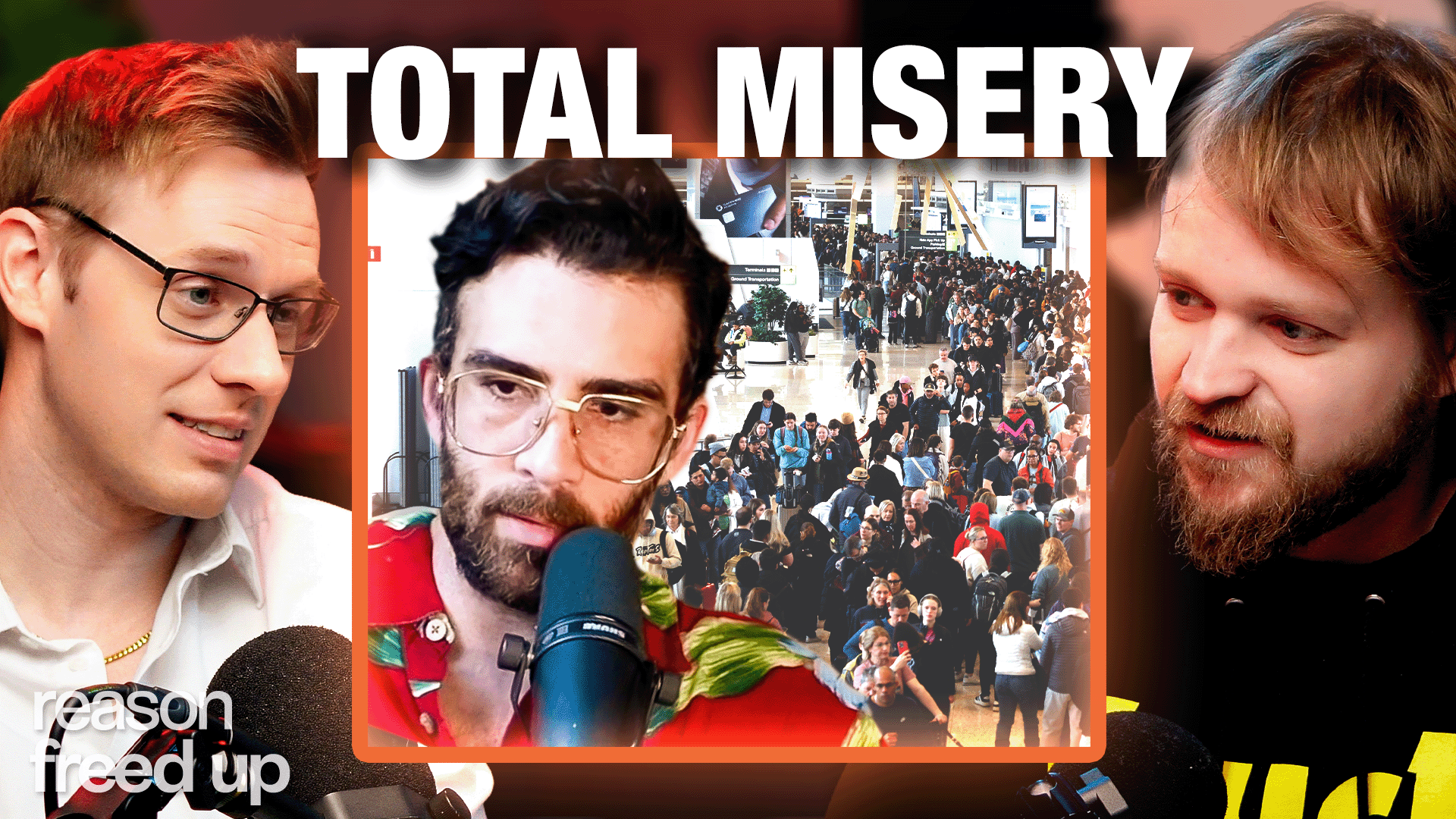
Podcast: TSA Dysfunction and Apocalyptic Governance Scenarios
A conversational episode examining both concrete operational failures (TSA) and theoretical governance breakdowns. The format allows for venting and exploration of how institutions fail under stress. While less structured than pure analysis, the episode value lies in connecting routine dysfunction to broader questions about state capacity.

Conservative Principles Under Pressure: A Recurring Ideological Defense
National Review advances a thematic piece arguing that longstanding conservative commitments require active, ongoing articulation against contemporary pressures. Without substantive detail in the excerpt, this appears to be editorial renewal rather than news analysis—the kind of principle-restating that intellectual conservative publications periodically undertake to clarify their stance amid shifting political winds.

Trump Administration's Foreign Policy: War and Economic Extraction
This opinion piece characterizes the administration's foreign policy approach as combining military aggression with material extraction—a departure from traditional Great Power restraint and toward what the author frames as imperial overreach. The headline suggests a pattern across multiple theaters rather than isolated incidents, implying a coherent strategic doctrine. Substantive disagreement on foreign policy premises (restraint vs. assertiveness, intervention vs. containment) deserves serious examination rather than dismissal.
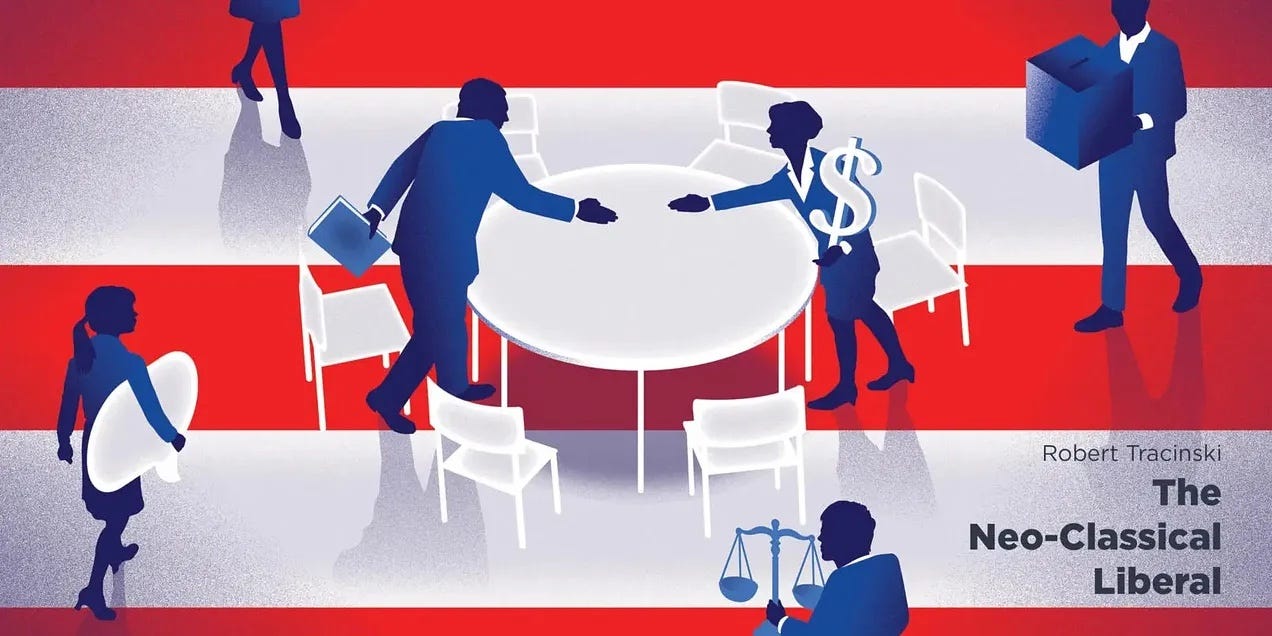
Trump Administration: Corruption Through Executive Dependency and Political Extraction
This opinion piece argues that Trump has constructed governance systems—particularly in regulatory and contract policy—that create financial dependencies on executive discretion, enabling wealth extraction from businesses and individuals seeking favorable treatment or regulatory avoidance. The mechanism mirrors historical patronage systems rather than systematic embezzlement. Whether one finds this argument convincing depends on: (1) evidence of quid pro quo rather than mere correlation, (2) whether comparable extraction occurs under Democratic administrations through different mechanisms (e.g., corporate compliance spending), and (3) institutional remedies available outside the election cycle.

Classical Liberal Case for Guarded Optimism: Institutions Holding Against Pressure
Rather than yielding to dystopian narratives about democratic collapse, this essay identifies three concrete reasons for restraint: institutional friction points that slow executive overreach, persistent decentralization of power across states and courts, and continued civil society capacity. The argument is neither Panglossian nor ideological—it acknowledges real authoritarian pressures while noting that structural safeguards haven't yet catastrophically failed. This represents mature political analysis: skeptical of both revolutionary rhetoric and naive faith in self-correcting systems.

Foreign Cities as Mirrors: What Urban Design Reveals About American Governance
Comparative urban observation—examining why cities in other developed democracies function differently—often reveals that performance gaps reflect not cultural virtue but policy choices and institutional design. This essay uses specific city comparisons to surface the mechanisms driving American urban problems: zoning restrictions, tax structures, procurement rules, and regulatory fragmentation. The method is conservative in the best sense: skeptical of grand theories, reliant on observable institutional differences, and assuming rational actors responding to incentives.
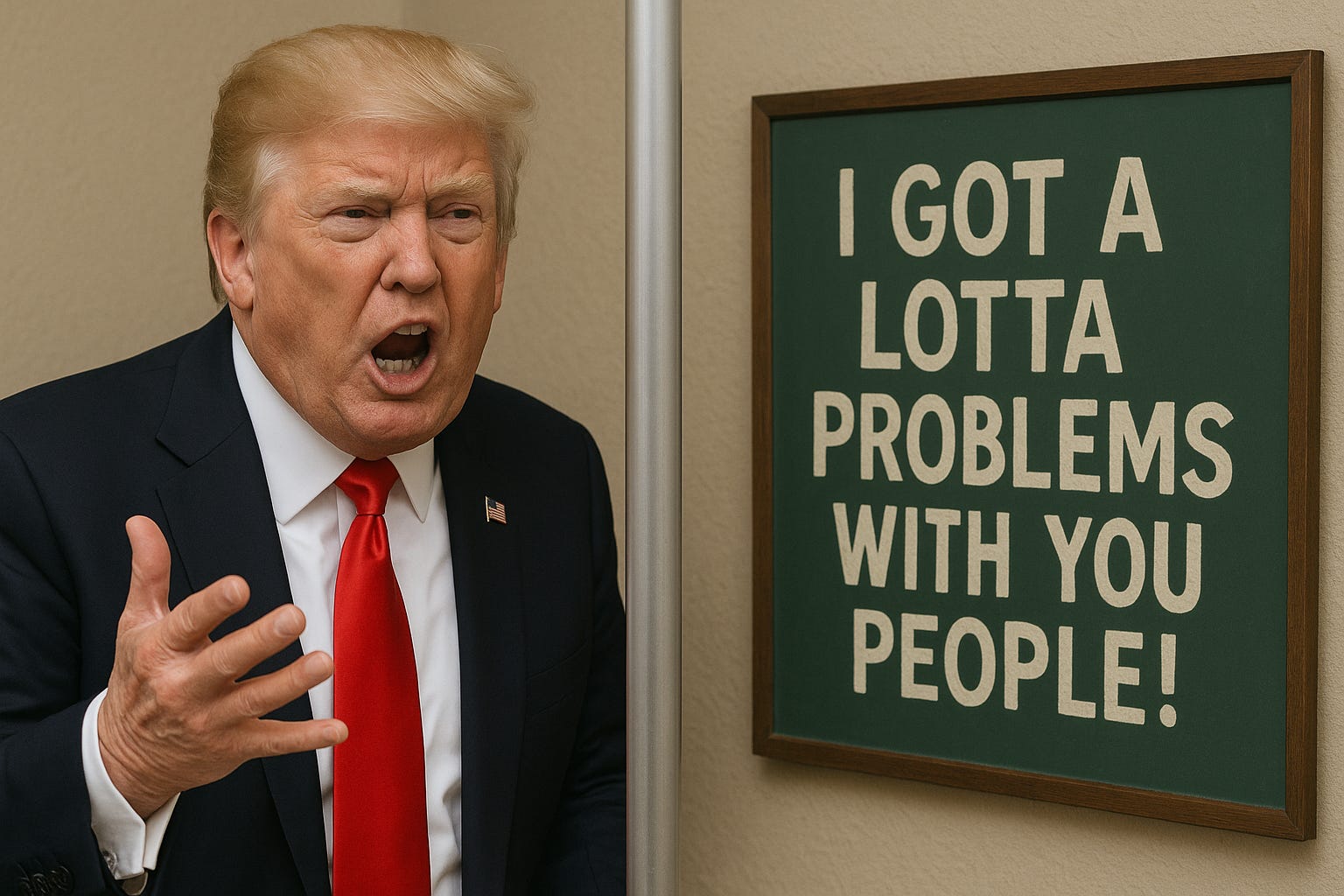
Trump Presidency as Grievance Theater: Political Performance Over Governance Pattern
Rather than viewing the Trump administration as cyclical repetition (Groundhog Day), this analysis frames it as serial expression of personal and political grievances used as governing method and media strategy. The argument is that grievance, not policy coherence or institutional building, drives decision-making and messaging. The piece is substantively critical but focuses on mechanism rather than moral condemnation. Readers skeptical of this framing should consider: what alternative explanation accounts for the apparent inconsistencies in policy priorities?

Maintaining Connection Across Political Division: Boundaries as Structural Tools
This essay argues that healthy democratic pluralism requires boundaries—norms, institutions, spaces where different value systems coexist without constant collision—rather than either forced integration or hermetic separation. The framing rejects both progressive universalism (all norms should be shared) and radical tribalism (separate coexistence). The practical examples should clarify the mechanism: specific institutional designs that allow genuine difference while maintaining reciprocity.

Climate Advocacy and Voter Credibility: The Performance Gap
This opinion argues that public skepticism toward climate activism stems from perceived hypocrisy among wealthy advocates—particularly private aviation use—rather than disagreement with underlying science. The framing conflates credibility with consistency, but the substantive question is whether lifestyle choices among prominent figures meaningfully predict policy efficacy or whether it's an ad hominem distraction from cost-benefit analysis of decarbonization strategies.

DEI at Universities: Executive Order and Higher Education Purpose
This opinion frames Trump's executive action against diversity, equity, and inclusion initiatives as corrective to institutional mission drift. The piece assumes DEI mechanisms are fundamentally contrary to academic merit and educational purpose, but sidesteps the empirical question: do DEI programs measurably degrade academic outcomes, or do they improve institutional function along other dimensions? This deserves rigorous interrogation, not assumption.