Mexican Navy recovers missing humanitarian vessels bound for Cuba
A Mexican naval operation located two small ships that had disappeared while attempting to deliver aid to Cuba, raising questions about maritime coordination, humanitarian logistics in geopolitically sensitive routes, and US-Cuba-Mexico trilateral dynamics. The incident illustrates how humanitarian missions in contested regions remain subject to surveillance and geopolitical friction. Coverage should clarify the vessels' origin, cargo composition, and whether the operation was coordinated.
India forecasts growth drag from Iran conflict, potential fiscal pressure
India's economic policymakers are flagging potential macroeconomic headwinds from escalating Iran tensions, particularly energy price volatility and maritime shipping disruption—twin shocks that would raise import costs and widen fiscal deficits as energy subsidies or transportation costs increase. This represents a real constraint on India's growth trajectory independent of domestic policy: as a major oil importer and a nation dependent on Middle Eastern energy and Strait of Hormuz shipping lanes, geopolitical shocks directly translate into inflation and fiscal strain. The statement signals official concern about external vulnerabilities even as India maintains growth ambitions.

Kelly Examines Conservative Voices Influencing Trump Administration Iran Policy
Conservative commentator Megyn Kelly critiques right-wing political and media figures for advocating military escalation against Iran, raising the accountability question of which advisors shaped Trump's foreign policy and what representations were made to justify particular courses of action. The piece implicitly engages debates within the hawkish coalition about Iran strategy and the proper degree of restraint. It reflects genuine intellectual disagreement among conservatives on Middle East intervention rather than partisan attack.
Trump Administration Rules Out Near-Term Iranian Ground Invasion
A Trump administration official signaled that military planners are not considering a ground invasion of Iran in the immediate term, despite escalating tensions. This represents a calibrated posture—maintaining deterrence and retaliatory capability while avoiding the resource commitment and escalation risk of sustained ground operations. The statement matters because it constrains expectations about U.S. military scope in the region and shapes assessments of how the conflict might conclude.
Secretary of State Rules Out Large Ground Deployment in Iran
Secretary of State Marco Rubio indicated that current U.S. strategy does not contemplate significant ground forces commitment to Iran, aligning with the earlier Trump administration signal on military scope. This messaging serves multiple purposes: it restrains allied expectations, signals to Iran the limits of potential escalation, and preserves administration flexibility by not foreclosing options. The statement is noteworthy for what it reveals about the administration's theory of the conflict—deterrence and measured response rather than regime change.
Rubio Warns Iran Conflict Could Redirect Ukraine Military Aid
Secretary of State Rubio raised the prospect that expanded Middle East operations could divert weapons earmarked for Ukraine to regional contingencies, creating a zero-sum dynamic between two distinct theaters. This reveals a genuine policy tension: the U.S. military-industrial base has limits on concurrent production of advanced munitions, and prioritization decisions will shape both conflicts' trajectories. The statement signals that Ukraine cannot assume uninterrupted weapons flows if Middle East escalation continues.
International Maritime Organization Brokers Seafarer Evacuation from Hormuz
The International Maritime Organization is negotiating an evacuation corridor to extract approximately 20,000 seafarers stranded in and around the Strait of Hormuz as regional military escalation makes ordinary maritime operations impossible. This humanitarian crisis represents the human cost of chokepoint concentration and illustrates how regional conflicts instantly create international labor dislocation. The negotiation of safe passage underscores how naval warfare now must grapple with civilian maritime populations in ways earlier conflicts did not.
Trump's Iran Escalation Inflicts Oil Price Pain on Latin American Allies
Latin American governments that aligned with Trump's foreign policy are now experiencing the trade-off firsthand: higher oil prices triggered by U.S. military actions against Iran. This illustrates a genuine tension in alliance management—political alignment with Washington can carry steep economic costs, particularly for commodity-dependent economies. The incident raises a question for U.S. policymakers: how to sustain allied support for contested military actions when the costs are borne unevenly and visibly by partners.

Houthis claim missile strike on Israel amid regional escalation warnings
Yemen-based Houthi forces claimed responsibility for a missile attack on Israel early Saturday, which Israeli defense systems intercepted without reported casualties. The strike follows Houthi warnings that they would enter the conflict if specific red-line conditions were met, suggesting a deliberate escalation decision rather than spontaneous engagement. This represents a widening of the regional conflict and tests the credibility of Houthi deterrent threats—a significant development for regional stability and U.S. military positioning.
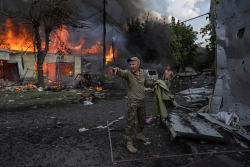
Ukraine Peace Push as Middle East Crisis Shifts Global Focus
An argument that intensified U.S. attention to Iran creates a diplomatic window for Ukraine settlement, and that Trump can demonstrate peacemaking credentials by pursuing negotiations. The piece rests on a contested premise—that concurrent crises create negotiating leverage rather than diffuse American attention—and assumes Ukraine settlement is possible without addressing the underlying Russian maximalist position. This illustrates a genuine trade-off in foreign policy bandwidth, though the strategic analysis needs substantiation.
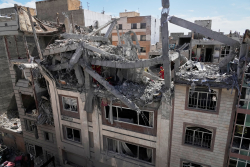
Iran's Economic Crisis Prompts Militarization of Civil Society
Iran's security apparatus is mobilizing civilians—including children over 12—into armed patrols and checkpoints as the economy deteriorates, signaling both state vulnerability and an escalating security posture. This reflects a classic authoritarian response to economic strain: substituting coercive control for institutional legitimacy. The tactic carries inherent risks—untrained militia create civilian casualties, generate resentment, and can destabilize regime coherence—making this a potential inflection point in Iranian state stability.

Iran sanctions strategy and Strait of Hormuz leverage: Economic implications
An analysis warns that Iran could weaponize its geographic control of the Strait of Hormuz—through which roughly one-fifth of global oil transits—to inflict economic pain that might eventually coerce U.S. policy concessions. The piece frames Iran policy as an asymmetric economic-leverage game: Iran has a high pain threshold domestically but can impose real costs on the global economy through chokepoint control. This raises genuine strategic questions about the sustainability of maximum-pressure sanctions absent either diplomacy, military deterrence, or acceptance of higher energy costs.
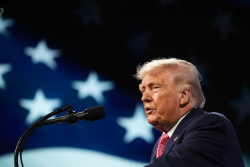
Iran Campaign: The Case Against Premature Military Withdrawal
An argument that President Trump should sustain military pressure on Iran rather than negotiate a quick exit. The piece engages a genuine strategic question—whether demonstrated resolve and continued force create better negotiating conditions, or whether they entrench conflict—but the excerpt provides insufficient detail to assess the specific military, diplomatic, or economic mechanisms being proposed. Readers would need the full article to evaluate whether this reflects a coherent Iran policy or reflexive hawkishness.
NASA's Private Space Station Plan Faces Stakeholder Resistance
NASA is proposing private companies operate successor space stations to the ISS after 2030, but the plan encounters friction from multiple constituencies—perhaps commercial operators on cost viability, ISS workers on employment, or other space agencies on continuity. This is a major infrastructure and procurement question with fiscal, geopolitical, and technological dimensions. Understanding the specific objections is essential to assessing whether the plan is sound policy or faces genuine technical/economic barriers.
Five Analysts Assess Iran's Capacity for Sustained Missile Barrages
Financial Times analysis examines Iran's ability to sustain repeated large-scale missile strikes against Israel and Gulf partners, drawing on expert estimates of ammunition stocks, production capacity, and logistical constraints. Understanding Iran's actual military endurance is critical for assessing whether the conflict will escalate to a war of attrition or exhaust itself through supply limitations. This is a data-driven assessment of conflict sustainability.
Houthi Missile Attack Escalates Iran War's Maritime Dimension
Houthi forces launched a missile attack, signaling their direct participation in the Iran conflict and raising risks to shipping in critical global trade routes including the Red Sea and Strait of Hormuz. This represents escalation beyond Israel-Iran direct engagement and introduces new actors with asymmetric capabilities into a already volatile theater. Maritime insurance costs and supply chain delays will ripple across global commerce.
Global Economic Leadership Grapples With Iran War's Uncontrolled Shock
The Iran conflict is forcing recalibration among international economic policymakers and institutional leaders who are confronting an open-ended crisis with cascading effects on energy, supply chains, and financial stability. The lack of consensus on resolution mechanisms underscores how fragmented global governance has become when responding to geopolitical shocks. This reflects a deeper question: whether multilateral institutions retain sufficient authority and coordination capacity to manage major disruptions.
Houthi Forces Enter Iran-Israel Conflict with Ballistic Missile Strikes
The Houthi movement launched ballistic missiles at Israel on Saturday, marking their formal entry into the month-long escalating conflict between Iran and Israel that has already destabilized energy markets and killed thousands. The Houthis' involvement widens the geographic and factional scope of the conflict, introducing a non-state actor with proven maritime capabilities into an already complex regional dynamic. This escalation increases the risk of further supply-chain disruptions and complicates potential negotiated off-ramps.
Pakistan Navigates US-Iran Diplomacy: Asymmetric Leverage and Regional Risk
Pakistan is positioning itself as broker between Trump administration outreach to Iran, hoping to extract economic and security concessions from both sides while managing the risk of becoming collateral damage if negotiations collapse. Islamabad's geographic position and ties to both actors create genuine diplomatic opportunity but also expose it to retaliation from spoilers—a high-wire act with limited margin for error.
Normalization of Leadership Targeting: Ethics and Strategic Consequences
Financial Times examines the erosion of historical taboos against assassinating enemy leaders, a practice long considered either dishonorable or strategically counterproductive. The normalization of decapitation strikes raises questions about precedent, reciprocal vulnerability, and whether targeting leadership actually shortens conflicts or escalates them unpredictably. The piece grapples with a genuine moral and strategic tension: eliminating a hostile leader may feel decisive but may also trigger cycles of retaliation and destabilize regional order.

US Troops Struck at Saudi Base; Rubio Projects Weeks-Long Iran Conflict
Iranian forces struck a US military installation in Saudi Arabia, and Secretary of State Rubio publicly estimated the conflict could extend 2-4 weeks, pushing oil benchmarks to $114 per barrel — their highest level since 2022. The damage assessment matters less than Rubio's forward guidance: a public statement on conflict duration from the administration's chief diplomat signals either (a) genuine intelligence assessment being shared to manage market expectations, or (b) an attempt to signal resolve to regional actors. Either way, the market is pricing in sustained supply disruption and geopolitical uncertainty extending into late spring or early summer.
China Recruits US Firms for Rural Development: Industrial Policy Meets Foreign Capital
China's government is explicitly soliciting US agricultural and rural-development companies to participate in its rural revitalization agenda. This signals Beijing's pragmatic willingness to deploy foreign expertise and capital for domestic modernization—while also creating potential leverage points for future negotiations. The pitch reveals both genuine infrastructure gaps and strategic opportunities for US firms willing to navigate Chinese state coordination.
Mongolia's PM Resigns Over Parliamentary Gridlock; Coalition Collapse Deepens
Mongolia's prime minister resigned to break legislative deadlock, signaling coalition collapse in a country with fragile democratic institutions and heavy dependence on China and Russian trade. This is a routine but symbolically important governance crisis in a geopolitically sensitive nation where political instability risks creating vacuums that neighboring powers exploit.

Bipartisan US Senate Delegation Visits Taiwan; Defense Bill Push Amid China Tensions
A bipartisan group of US senators traveled to Taiwan to advance defense legislation, signaling Congressional commitment to arming the island amid intensifying Chinese military pressure and diplomatic coercion. The visit demonstrates the deepening structural alignment between executive and legislative branches on Taiwan, though it also risks accelerating the security dilemma spiral — each US move to strengthen Taiwan's defenses prompts Chinese military exercises that validate Taiwanese fears of invasion, justifying further US support. The underlying question is whether this dynamic leads to stabilized deterrence or whether it ineluctably trends toward miscalculation.

Iranian Missile Strike Injures Ten U.S. Service Members in Saudi Arabia
Iran launched a direct attack on Prince Sultan Air Base in Saudi Arabia, injuring ten American personnel, two seriously—an escalation that moves beyond proxy warfare toward direct military confrontation. This represents a shift in Iranian tactics from deniable strikes to claimed responsibility, signaling either increased confidence or desperation as U.S.-Iran tensions intensify. The incident tests Trump administration deterrence credibility and raises questions about regional escalation dynamics and U.S. force protection posture.

Former US Envoy Burns Assesses Putin's Strategic Ambitions and Iran's Geopolitical Role
Nicholas Burns, former US ambassador to China, analyzes how the Iran conflict intersects with Russian objectives in Ukraine and US-China competition, arguing Putin pursues expansionist goals with ideological conviction rather than pragmatic restraint. Burns's framing—emphasizing the interconnected nature of crises in Ukraine, the Middle East, and Asia—suggests that traditional regional analysis misses how authoritarian powers coordinate across theaters and exploit American strategic overstretch. The assessment carries implications for defense spending, alliance management, and whether the US can simultaneously deter Russia, contain China, and manage Iran without accepting strategic losses in some domains.

Secretary of State Signals Prolonged Iran Conflict; Oil Surges Past $114
Rubio's public estimate that the Iran conflict could persist for weeks triggered renewed oil market volatility and fresh equity losses on Wall Street, as investors recalibrated assumptions about the duration and severity of Middle East disruption. The significance lies in the direct causal chain: official government messaging moved markets in real time, suggesting either that prior market pricing had underestimated conflict duration, or that the administration's own confidence in a quicker resolution has shifted. This creates a policy credibility question — if the conflict extends beyond Rubio's window, will markets interpret that as mismanagement?

Trump Signals Continued Iran Pressure, Threatens Cuban Escalation
Speaking to a Saudi investment forum, President Trump claimed military success against Iran and signaled Cuba will be the next target of U.S. pressure—language suggesting a broader confrontational strategy across multiple adversaries simultaneously. The rhetorical framing to a Saudi audience is strategic, reinforcing Gulf state alignment while placing Iran on notice; the Cuba reference indicates intention to expand hemispheric pressure beyond current Iran tensions. This raises questions about resource allocation, allied burden-sharing, and whether multiple simultaneous conflicts strain military and economic capacity.

Republican fractures over Israel policy amid Gaza war continuation
The Dispatch examines emerging tensions within the GOP over support for Israel's prosecution of the war, with some Republicans questioning the strategic rationale or humanitarian costs of continued conflict. This reflects a genuine conservative debate—between pro-Israel hawks, fiscal realists concerned with aid levels, and libertarians skeptical of extended military entanglement. The question of whether Republican coalition consensus on Israel can hold under electoral pressure is substantive and forward-looking.

Houthis Set Conditions for Direct Entry Into Iran-Israel Conflict
The Houthi movement, backed by Iran's Revolutionary Guard Corps, outlined three specific red lines that would trigger direct military intervention beyond current maritime harassment—a calibrated escalation threat rather than unconditional expansion of the war. The conditional framing suggests Iran is using proxies as graduated pressure mechanisms, not as uncontrollable actors, and indicates awareness of escalation risks that might trigger broader coalition response. Understanding these stated thresholds is critical for deterrence policy and avoiding inadvertent triggers of regional conflagration.