
Rand Paul signals potential 2028 presidential candidacy
Sen. Rand Paul told CBS News he is actively considering a 2028 White House run, estimating his odds at fifty-fifty contingent on post-2024 developments. Paul's possible entry would inject libertarian-inflected foreign policy skepticism and civil liberties emphasis into a potential primary field, representing a distinct pole from hawkish or nationalist Republican variants. His decision timing—tied to midterm results—suggests he is reading broader party directional cues before committing resources.
Bloomberg Weekend News Roundup: March 28, 2026
Bloomberg's weekend news program featuring hosts Gura, Ruffini, and Mateo with guest Nevada TSA union representative and former US Ambassador to Ukraine, covering headline stories from the prior week. Standard weekend news aggregation format; substantive content unclear from promotional excerpt.

FCC Chair Carr Frames Media Criticism as Trump Administration Success
Federal Communications Commission Chair Brendan Carr, speaking at CPAC, characterized Trump's conflict with legacy media institutions as a political victory, suggesting the president has succeeded where other politicians capitulated to journalistic pressure. This represents institutional messaging from a regulatory official blending policy role with partisan political commentary, raising questions about the FCC's institutional independence and Carr's framing of media criticism as policy success rather than governance challenge.

Federal judge dismisses charges against officers in Taylor warrant case
A U.S. District judge agreed to drop charges against two former Louisville police officers accused of submitting false information on the search warrant that led to Breonna Taylor's fatal shooting in 2020. The ruling represents a significant legal reversal in a high-profile case that galvanized national protest and raised questions about prosecutorial strategy—specifically, whether charging individual officers with warrant fraud was the appropriate legal mechanism versus departmental discipline or civil liability. The decision may signal judicial skepticism about the viability of criminal charges in cases involving warrant inaccuracy without evidence of intentional deliberate falsification.
Quiz: Ammunition, Hoarding, Trade
Bloomberg's entertainment quiz covering news topics including ammunition markets, hoarding behavior, and trade policy.

Trump remarks on surrounding himself with loyal personnel draw scrutiny
Trump made off-hand remarks at an investment conference in Miami suggesting he prefers advisors who demonstrate loyalty to his agenda and publicly affirm his accomplishments. The comment touches on a recurring question in Trump-era governance: the tension between hiring experienced institutional players who may constrain executive ambition and assembling a unified team aligned with a president's policy vision. This preference for loyalty over expertise has both empirical consequences (whether administrations execute policy effectively) and constitutional implications (whether it compromises institutional checks).

House passes unilateral DHS bill as shutdown negotiations stall into week seven
The House passed standalone legislation to fully fund the Department of Homeland Security as a seventh week of partial government shutdown persists, with Speaker Johnson rejecting a Senate-negotiated compromise. The move reflects deep Republican disagreement over appropriations strategy—specifically whether to use DHS funding as leverage for border policy concessions or to separate funding from policy fights. The deadlock reveals both procedural dysfunction (inability to pass routine appropriations) and substantive disagreement within the GOP over which fights are worth sustained shutdown costs.

Planned nationwide protests target Iran strikes, immigration enforcement, and economic policy
Over 3,000 'No Kings' demonstrations are scheduled nationwide to oppose military action in Iran, the Trump administration's immigration enforcement, and specified economic policies. The coordination suggests organized progressive opposition to multiple Trump initiatives simultaneously—a logistical note on protest infrastructure. From a policy perspective, the breadth of grievances (foreign policy, immigration, economic) bundled under a single protest banner may diffuse focus on any single argument, limiting persuasive impact on undecided voters.

"No Kings" Movement Readies Weekend Demonstrations
A brief note on upcoming protest activity. The dismissive framing ('they're still crazy') violates editorial standards—it editorializes rather than informs. Without substantive detail on protest demands, size, or organizational structure, this item provides no analytical value and appears designed for partisan mockery rather than understanding.
SAVE America Act: Center-Right Commentary Collection
This is a placeholder headline for a curated collection of analysis on the SAVE America Act rather than original reporting or analysis. Without access to the underlying articles, substantive summary is impossible.
CPAC's Declining Star Power Signals Conservative Coalition Shift
The absence of Trump family speakers at CPAC, once the dominant conservative gathering, suggests structural changes in conservative political geography and influence—either declining CPAC relevance, Trump's pivot away from traditional conservative institutions, or both. The trend merits analysis: Does it reflect factionalism within conservatism, the rise of alternative platforms, or merely scheduling conflicts? The headline's tone ('shrinking') editorializes rather than explains the institutional dynamics at work.
Media Coverage Double Standard on Political Spouses' Social Media Activity
The piece appears to argue that mainstream media apply different standards when scrutinizing the social-media conduct of progressive versus conservative political figures' spouses. Without specifics on the actual social-media content, the controversy's nature, or documented evidence of differential coverage, this cannot be evaluated. The framing ('scandal,' 'corruption') presumes rather than establishes wrongdoing, violating the charter's rigorous standards.
Trump Publicly Defends Election Campaign Strategy
The headline and excerpt are insufficient for analysis. The framing—'election grab' and 'bragging'—represents editorial judgment rather than news reporting. Without specific statements, policy proposals, or context, this cannot be evaluated on substantive grounds. A proper rewrite would require actual quotations and specific actions being referenced.
Special Election Results Show Swing in Competitive Districts
Electoral data from off-cycle special elections can indicate short-term momentum or structural realignment, depending on district fundamentals and whether margins are widening or narrowing. The headline assumes causation ('sign of hope') rather than reporting observed results. Substantive analysis requires: What districts? What margins? How do these compare to 2020 and 2022 baselines? Are these solid Democratic districts trending blue further, or are Republican districts genuinely flipping? Sample size and selection effects matter enormously.

Record House Republican retirements complicate Johnson's 2026 midterm outlook
Thirty-six House Republicans have announced retirements or plans to run for other offices, significantly above historical averages and creating cascading recruitment challenges for Speaker Johnson ahead of the 2026 midterms. The exodus reflects either genuine dissatisfaction with congressional dysfunction or rational calculation that the current majority is unsustainable—likely both. This has real institutional consequences: open seats require investment, create vulnerability to primary challenges, and reduce institutional continuity in committee work and legislative expertise.

House and Senate pass divergent DHS bills; shutdown impasse persists
Both chambers passed separate DHS funding legislation on Friday without reconciling differences, meaning neither bill can become law without additional negotiation, extending the partial shutdown into its seventh week. The divergence reflects unresolved disputes over policy riders attached to appropriations—specifically, what conditions (border authority, enforcement mechanisms, policy restrictions) the Republican caucus demands as the price of funding. The tactical failure reveals either genuine disagreement within the GOP or difficulty coordinating between chambers under tight timelines.

Johnson rejects Thune-negotiated DHS compromise, exposing GOP fissures
Speaker Johnson forcefully rejected a DHS funding compromise negotiated by Senate Majority Leader John Thune, signaling House Republican unwillingness to accept Senate terms and displaying public disagreement between Republican leadership. The move suggests either that House conservatives have policy demands the Senate deal doesn't meet or that Johnson faces internal pressure to reject any appearance of Senate capitulation. The public conflict weakens unified Republican messaging and may extend shutdown costs to Democrats and the administration.

Supreme Court considers mail-in ballot grace periods; states brace for changes
The Supreme Court heard arguments on whether states can permit mail-in ballots received after Election Day to count if postmarked before it, with states already preparing contingency plans for a potential ruling eliminating such grace periods. A ruling against grace periods would likely reduce ballot-counting windows and create disparities in state-level election administration, affecting 2026 midterms and beyond. The case reveals tension between ballot access (which grace periods expand) and election-finality (which strict deadlines promote), with downstream consequences for election administration costs and litigation risk.
Open Thread
Routine community engagement feature.

House Passes Eight-Week DHS Funding After Rejecting Senate Compromise
The House GOP rejected a Senate-passed DHS funding bill and passed a partisan Republican alternative, funding the agency for eight weeks while maintaining immigration enforcement resources that Senate negotiators had attempted to exclude. The move reflects divergent priorities within Republican leadership: Senate willingness to negotiate restrictions on immigration enforcement spending versus House commitment to enforcement funding. This is a clear institutional conflict over immigration policy expressed through appropriations mechanics, not Democratic obstruction.

Senator Fetterman Notes ICE Deployment Has Improved Airport Security Efficiency
During a DHS funding crisis that has degraded airport operations, Sen. Fetterman observed that ICE officer presence at security checkpoints has actually enhanced operational performance metrics. This is noteworthy because it acknowledges a concrete benefit from the executive deployment while the agency faces broader operational challenges. The remark suggests that deployment of enforcement personnel to non-traditional venues can have measurable operational effects—a claim worth testing independently against actual TSA/airport performance data rather than accepting either as partisan spin.

Sanctioned Russian Lawmakers' U.S. Capitol Visit Raises Enforcement Questions
Democratic lawmakers and one Republican colleague are demanding explanation for how sanctioned Russian legislators gained Capitol access this week, organized by Rep. Anna Paulina Luna—an incident that raises practical questions about enforcement of sanctions regimes and vetting procedures for diplomatic visitors. The visit appears coordinated with executive branch awareness, suggesting either a deliberate policy shift or a significant institutional lapse in coordination between legislative and executive oversight. This touches on broader questions about sanctions credibility and whether the Trump administration is signaling diplomatic openness toward Russia.

Mozambique Ex-Finance Minister Detained on ICE Custody Issue During Deportation
A former Mozambique finance minister convicted in the US for $2 billion bond fraud was held by ICE rather than deported as scheduled, raising procedural questions about coordination between federal agencies and international enforcement. The case illustrates the institutional complexity of pursuing cross-border financial crimes—sovereign nations may resist extradition, cooperation is inconsistent, and enforcement often depends on bureaucratic contingencies rather than clear legal or diplomatic frameworks. Mozambique itself has been attempting to address corruption and recover stolen assets, making this case emblematic of weak institutional capacity in developing economies to police high-level financial crime.

Democrats Challenge Speaker Johnson's DHS Funding Strategy
Democratic leaders attacked House Speaker Mike Johnson for rejecting the Senate-passed DHS bill, accusing GOP conservatives of deliberately prolonging the partial shutdown for factional leverage—a dispute rooted in competing theories of negotiating tactics and acceptable shutdown duration. Democrats argue for immediate passage of the Senate compromise; Republicans counter that incomplete funding deserves rejection on substance. The deeper institutional question is whether shutdown threats have become so routine that neither party can credibly claim the mantle of responsible governance.

Foodborne Illness Outbreak Linked to Raw Dairy Products
A multistate illness cluster involving nine cases, including one with kidney failure, has been epidemiologically linked to raw cheese products from Raw Farm, though the company contests the connection. This illustrates the persistent regulatory tension between raw dairy advocates (who cite traditional fermentation and natural probiotics) and public health agencies that treat unpasteurized dairy as inherently riskier. The case hinges on whether anecdotal patient reports constitute epidemiological evidence sufficient to warrant action.
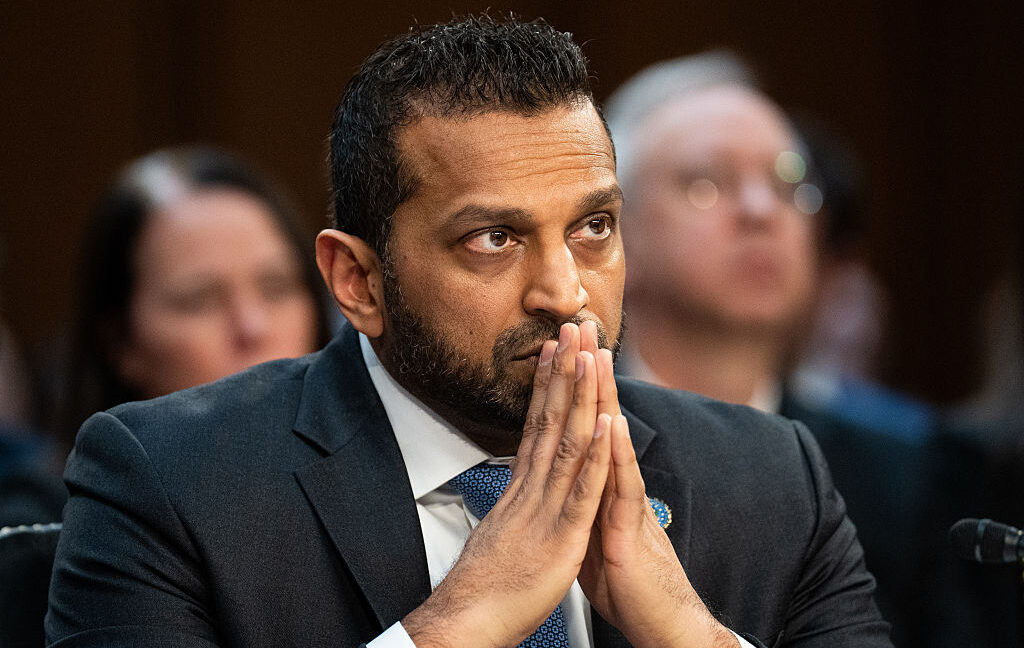
FBI Director's Personal Email Compromised: Operational Security Questions Emerge
The Department of Justice confirmed that FBI Director Kash Patel's personal email account was breached, raising questions about the compartmentalization between official and personal communications at senior intelligence positions. The incident underscores tensions between security protocols and practical necessity—personal accounts are theoretically lower-value targets but are often less protected than official systems.

Judge Sanctions Defendant Appearing by Video While Operating Vehicle
A defendant violated courtroom protocol by joining a video appearance while actively driving and then misrepresented his circumstances to the judge, resulting in judicial rebuke. This is a minor breach of courtroom decorum with no broader institutional implications.

FAA investigates airspace conflict between commercial jet and Army helicopter
A Sikorsky Black Hawk helicopter crossed directly in front of United Airlines Flight 589 near John Wayne Airport in Santa Ana, California, prompting a Federal Aviation Administration safety investigation. The incident raises questions about airspace management protocols and coordination between military and civilian aviation authorities. Such proximity violations are rare in modern air traffic control systems and typically trigger institutional reviews of procedural compliance and communication channels.

Federal Judge Blocks Anthropic Supply Chain Designation as Pretextual
A federal judge rejected the government's classification of AI firm Anthropic as a supply chain security risk, reasoning that the designation functioned as punishment for the company's public disagreement with government policy rather than as a legitimate regulatory determination. This represents a meaningful pushback against the use of national security classifications to silence corporate dissent—a civil liberties issue that cuts across traditional partisan lines and raises important questions about administrative due process and the scope of executive authority over private firms.

Guthrie returns to 'Today' show following family loss
NBC News anchor Savannah Guthrie announced her return to the 'Today' show in early April, approximately two months after her mother's disappearance. The announcement provides a personal resolution to a widely covered missing-person case while marking a personnel change for a major network morning program.