Tech Journalist Examines Meta Trial and Regulation's Speech Trade-Offs
Original headline: “Taylor Lorenz: Is Social Media Responsible for Bad Parenting?”
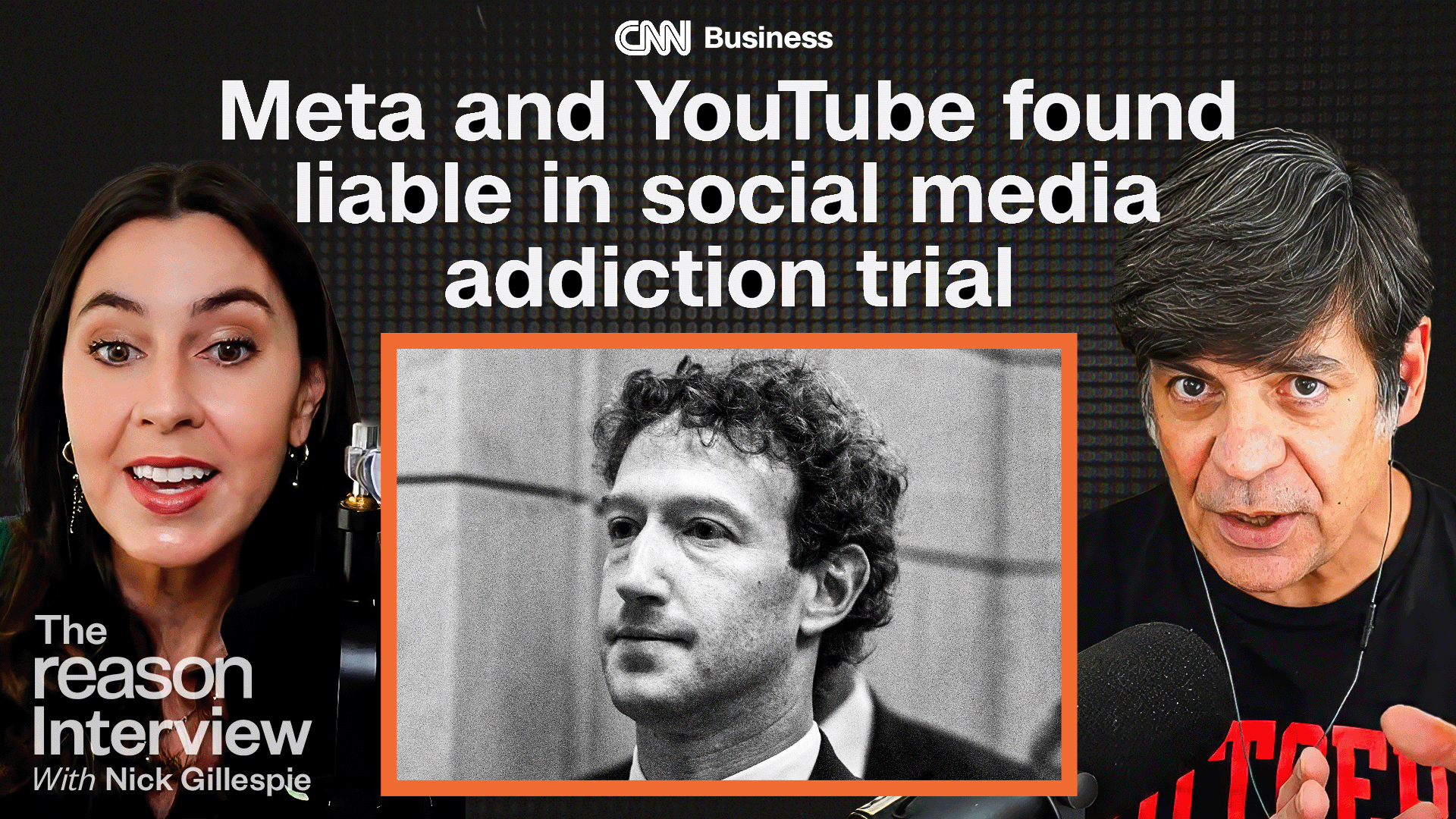
Tech journalist Taylor Lorenz discusses the ongoing Meta litigation, the psychology of social-media panic cycles, and the constitutional risks of aggressive regulation of online platforms. Lorenz appears skeptical of framings that blame technology platforms for parenting failures, positioning the debate within longer historical patterns of moral panic over new media. The piece captures a genuine tension between protecting children from algorithmic harms and avoiding regulation that could chill speech or concentrate power in government hands.
Read Full Article at ReasonIdaho Criminalizes Transgender Bathroom Access in Public and Private Spaces
Idaho enacted legislation that extends transgender bathroom restrictions to privately owned businesses, not just government facilities—a significant expansion of state authority into private commercial decisions that raises constitutional questions about property rights, interstate commerce, and regulatory federalism. The 28-7 Senate vote suggests broad support within the state but also reflects the cultural fissure between red-state legislatures and private business interests, many of which resist such mandates. This tests whether conservative principles of limited government and property rights can coexist with cultural-conservative enforcement of gender norms.
The Masculinity Problem: Autonomy Without Obligation
A cultural essay argues that contemporary culture has severed autonomy and self-expression from obligation and responsibility, creating conditions where young men receive affirmation without expectation, then face confusing failure when entry into adulthood demands both rights and duties. The piece diagnoses a cultural grammar problem—the language of obligation has become uncomfortable—rather than blaming individual failing or institutional malfunction. This framing suggests that reversing male disaffection requires not resource redistribution but cultural recovery of the concept that freedom and responsibility are reciprocal rather than opposed.
Public Libraries as Civic Infrastructure: Universal Access Without Ideological Gatekeeping
This essay recuperates Andrew Carnegie's library endowment as a model of genuinely inclusive civic infrastructure—free, secular, and nonideological in ways that modern institutions increasingly are not. The argument pivots on a structural insight: libraries offer the benefits of community space and information access without the membership requirements or commercial friction that fragment contemporary civil society.
AI Art and Human Creativity: Negotiating Authenticity in Generative Culture
As generative AI systems produce increasingly sophisticated visual and textual work, the question shifts from 'can machines create?' to 'what makes human artistic production irreplaceable?' The piece contends that without intentional cultural choices to preserve spaces for human expression—through market mechanisms, institutional support, or consumer preference—the economic pressure to use cheaper machine generation will hollow out human artistic practice. This is a genuine trade-off between efficiency and authenticity, not a Luddite panic. Markets don't automatically preserve culturally important goods.
Short-Form Video Platforms: Creative Proliferation Versus Literacy Decline
TikTok, Instagram Reels, and YouTube Shorts have democratized creative production and enabled new forms of visual and narrative expression—particularly among younger users who might otherwise lack platforms. However, the attention economics of these platforms systematically reward visual-emotional content over sustained argumentation or reading. The result: explosive creative growth alongside measurable declines in reading comprehension and sustained attention capacity. This is a real sociological trade-off, not a moral panic about 'kids these days'—and it has implications for political discourse and civic literacy.